Best AI Home Gym Systems: Tonal vs Vitruvian vs Tempo 2026
The AI home gym market has matured fast. Where a few years ago smart home training meant a Peloton bike or a basic mirror, today you can build a fully AI-powered strength training system that rivals a commercial gym — complete with adaptive resistance, real-time form feedback, and personalized programming. Three machines dominate this space in 2026: Tonal 2, Vitruvian Trainer+, and Tempo Studio. All three qualify as legitimate AI home gym systems. All three cost thousands of dollars. And all three serve fundamentally different buyers. This comparison breaks down exactly who should buy which.
We analyzed specs, real-world user reviews, membership costs, space requirements, and AI capabilities across each system to give you the most complete head-to-head available in 2026. One key note: only the Vitruvian Trainer+ is available on Amazon. Tonal and Tempo sell exclusively through their own websites — links below go directly to each brand.
Quick Comparison: AI Home Gym Systems 2026
| Machine | Price | Membership | Max Resistance | Rating | Best For |
|---|---|---|---|---|---|
| Tonal 2 | $3,995 | $59.95/mo | 200 lbs | ⭐ 4.6/5 | Best overall AI home gym |
| 🏆 Vitruvian Trainer+ Best on Amazon | $2,990 | ~$40/mo | 440 lbs | ⭐ 4.4/5 | Best for serious lifters |
| Tempo Studio | $2,495+ | $59/mo | ~200 lbs | ⭐ 4.5/5 | Best for beginners |
Tonal 2 — Best Overall AI Home Gym
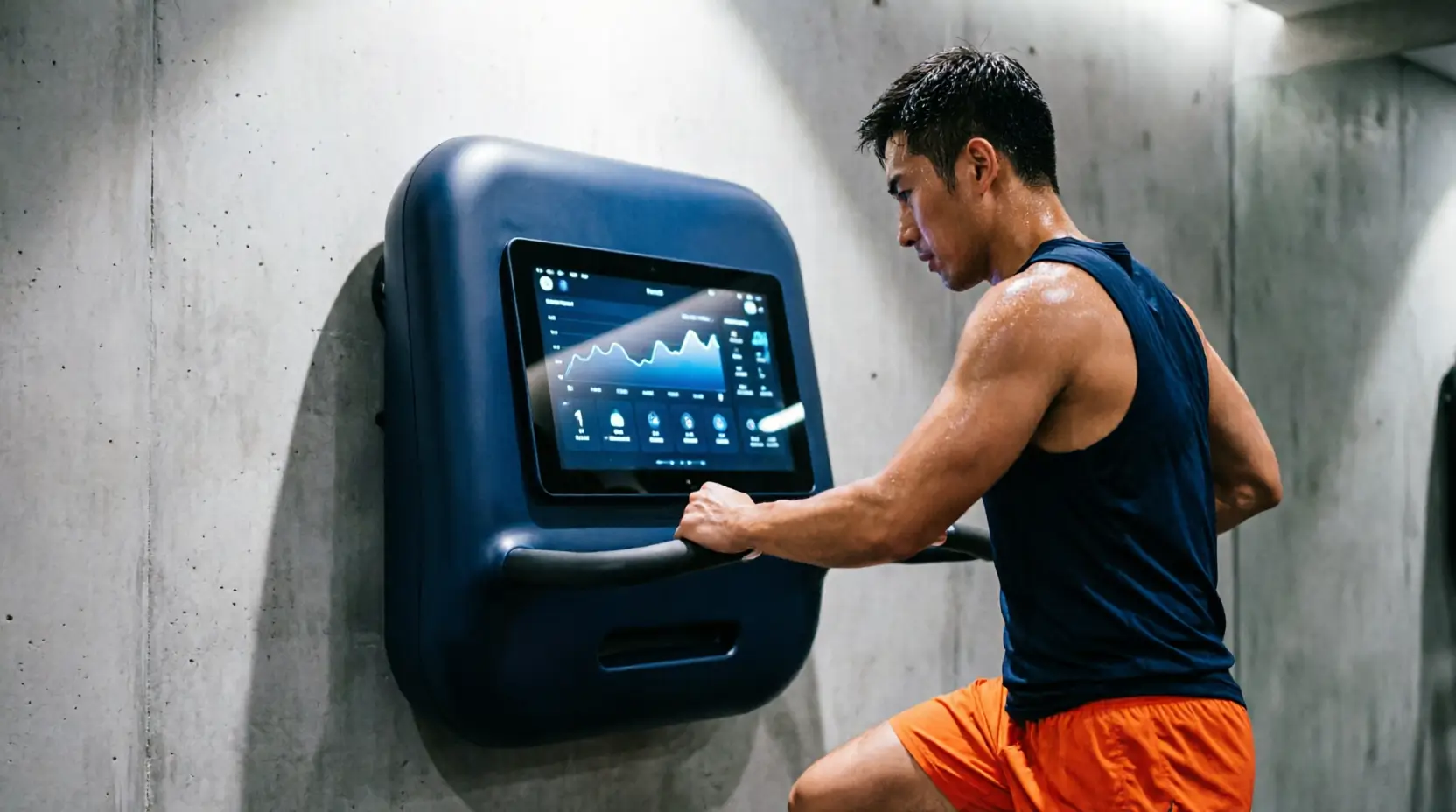
Tonal 2 is the most polished AI home gym on the market. Wall-mounted and compact, it uses electromagnetic resistance to generate up to 200 lbs of digital weight through two adjustable arms. The AI engine — which Tonal calls Smart Flex — automatically adjusts resistance mid-set based on your output, making every rep count. The 2026 iteration adds improved motion tracking, faster weight adjustments, and a refreshed content library with over 10,000 expert-led classes covering strength, cardio, yoga, and mobility. The 24-inch touchscreen is vivid and responsive. Installation is professional and included in the price.
Specs: Wall-mounted | Up to 200 lbs digital resistance | 24″ HD touchscreen | Smart Flex adaptive AI | Includes Smart Accessories bundle | Professional installation included
✅ Pros: Most refined AI and adaptive resistance system, premium content library, sleek wall-mounted design saves floor space.
❌ Cons: Highest price point at $3,995, mandatory 12-month membership commitment, 200 lb cap limits advanced powerlifters.
Vitruvian Trainer+ — Best AI Home Gym for Serious Lifters
The Vitruvian Trainer+ is the most powerful AI home gym in this comparison. A low-profile carbon fiber platform roughly the size of a yoga mat, it generates up to 440 lbs of adaptive digital resistance — more than double Tonal’s cap. This makes it the only system here that genuinely serves elite athletes and advanced strength athletes who squat and deadlift heavy. The adaptive algorithm adjusts resistance in real time through the concentric and eccentric phases of each lift, and the eccentric overload mode is clinically validated to accelerate strength gains. The platform is portable (under 70 lbs), requires no installation, and stores under a bed or couch.
Specs: Platform design — 46″ x 20″ x 4.5″ | Up to 440 lbs digital resistance | Carbon fiber reinforced shell | Bluetooth app-controlled | 3 months All Access membership included | No installation required
✅ Pros: Highest resistance ceiling (440 lbs), portable and storable, no installation, eccentric overload mode is a genuine performance differentiator.
❌ Cons: No built-in screen (app + TV required), smaller content library than Tonal or Tempo, requires floor space for use.
Tempo Studio — Best AI Home Gym for Beginners
Tempo Studio takes a different approach to the AI home gym concept: instead of digital resistance, it uses traditional free weights (plates, dumbbells, barbells) combined with 3D Time-of-Flight sensors that track your movement in real time. The AI provides form corrections, rep counting, and weight recommendations as you lift — functioning more like a virtual personal trainer than a pure machine. This makes Tempo uniquely suited to beginners who need coaching feedback, and to athletes who want to train with real iron. The 42-inch touchscreen and high-quality class library rival Tonal’s in terms of production value.
Specs: Freestanding cabinet — 72″ H x 26″ W x 16″ D | 42″ HD touchscreen | 3D Time-of-Flight AI sensors | Real iron weights included | No wall mounting required | 3-year limited warranty
✅ Pros: Real weights (not digital resistance), best form feedback technology, no mandatory wall installation, premium coaching content.
❌ Cons: Large footprint (needs 6×10 ft workout space), weight ceiling limited by included plates, not suitable for garage gyms.
AI Home Gym Head-to-Head: Key Criteria
Price & Total Cost of Ownership
Upfront cost alone does not tell the full story for any AI home gym. Tonal 2 costs $3,995 but requires a 12-month membership commitment at $59.95/month — adding ~$720 in year one for a true first-year cost of ~$4,715. Vitruvian at $2,990 includes 3 months of All Access, then roughly $40/month thereafter. Tempo Studio starts at $2,495 for the Starter package but the Pro bundle with squat rack and full weight set runs over $3,500 — plus $59/month membership. Over three years, all three systems land in a similar total cost range of $5,000–$7,000, making the upfront price less decisive than fit and feature preference.
AI & Adaptive Technology
Tonal’s Smart Flex is the most seamless AI resistance system — it adjusts weight between reps invisibly, suggests progressive overload automatically, and personalizes every session to your training history. Vitruvian’s adaptive algorithm is equally sophisticated in terms of resistance modulation, and its eccentric overload mode is backed by peer-reviewed strength research showing eccentric training produces superior muscle hypertrophy. Tempo’s 3D sensors take a different route — form correction rather than resistance adaptation — which is arguably more valuable for safety-conscious beginners. Each system represents a legitimate but distinct approach to the AI home gym concept.
Space Requirements
Tonal is the clear winner for small spaces: wall-mounted, it occupies essentially zero floor space and only needs about 7×7 feet of clear workout area. Vitruvian is the most flexible — the platform stores under furniture and can be used anywhere with adequate ceiling height. Tempo Studio requires the most space: the cabinet itself is large, and Tempo recommends a 6×10 foot clear zone in front of the screen. For apartment dwellers or small home gym setups, Tonal or Vitruvian are the practical choices for a true AI home gym in tight quarters.
Who Should Buy Each
Buy Tonal 2 if you want the most complete, plug-and-play AI home gym experience with minimal setup friction, a wall-mounted footprint, and a world-class content library. Best for intermediate lifters and households where multiple people train at different levels.
Buy Vitruvian Thttps://amzn.to/414yOoJrainer+ if you are an advanced or serious strength athlete who needs resistance above 200 lbs, values portability, or wants to incorporate eccentric overload training. Best for performance-focused buyers who already know what they want from a workout.
Buy Tempo Studio if form feedback and coaching quality matter most to you, if you prefer training with real iron over digital resistance, or if you are a beginner who needs guided programming with real-time correction to train safely.
Frequently Asked Questions
Is an AI home gym worth the investment?
For consistent users, yes. A quality AI home gym replaces a gym membership, a personal trainer, and a home weight setup simultaneously. Over 3-5 years, the math often favors the machine — especially when factoring in the time saved commuting to a gym. The key is consistent use: these systems reward regular training with measurable progressive overload and data-driven results.
Can beginners use these AI home gym systems?
All three systems accommodate beginners, but Tempo Studio is the most beginner-friendly thanks to its real-time form correction technology. Tonal is also well-suited to beginners with its guided onboarding and auto-weight suggestions. Vitruvian assumes more self-direction and is best suited to intermediate or advanced athletes who already have solid movement patterns.
What happens if the company goes out of business?
This is a legitimate concern for any AI home gym that depends on cloud connectivity. Vitruvian’s Trainer+ functions as a basic resistance machine without the app. Tonal and Tempo are more dependent on their subscription infrastructure. All three companies are well-funded and actively growing as of 2026, but it is worth reading each brand’s terms of service regarding offline functionality before purchasing.
Is the Vitruvian Trainer+ available on Amazon?
Yes — the Vitruvian Trainer+ is available on Amazon (ASIN: B09VSPVZWY), making it the only machine in this AI home gym comparison with an Amazon listing. Tonal and Tempo sell exclusively through their own websites. Links to all three are provided in this article.
Final Verdict
There is no single best AI home gym — there is only the best one for your specific situation. Tonal 2 wins on overall polish, ecosystem maturity, and space efficiency. Vitruvian wins on raw resistance capacity and portability. Tempo wins on form feedback and the coaching experience for beginners. If budget is the primary constraint, the Vitruvian Trainer+ offers the highest resistance ceiling at the lowest entry price and is the only option available on Amazon. If you want the most complete out-of-the-box experience and wall space is available, Tonal 2 remains the benchmark for the AI home gym category in 2026.
Written by the GearGuide editorial team, specializing in sports and fitness equipment since 2024.
Last updated: March 2026 | Affiliate Disclosure