

Bone Conduction Headphones vs Open-Ear: Best Running Picks 2026
If you run outdoors, your headphones are not just an audio device — they are a safety tool. Traditional in-ear earbuds seal the ear canal and block ambient sound, creating a real hazard on roads, trails, and busy bike paths. The solution is open-ear audio: either bone conduction headphones, which bypass the ear entirely by transmitting sound through your cheekbones, or open-ear earbuds, which sit near the ear canal without sealing it. Both technologies keep you aware of your surroundings. Both are available at reasonable prices on Amazon in 2026. But they work very differently, sound very different, and suit different types of runners. This comparison breaks down exactly which technology is right for you.
Quick Comparison: Best Running Headphones for Safety 2026
| Model | Type | Price | Battery | Rating | Best For |
|---|---|---|---|---|---|
| 🏆 Shokz OpenRun Pro 2 Best Overall | Bone conduction | $179.95 | 12h | ⭐ 4.5/5 | Best bone conduction overall |
| Shokz OpenRun | Bone conduction | $129.95 | 8h | ⭐ 4.6/5 | Best value bone conduction |
| Shokz OpenFit 2 | Open-ear | $179.95 | 11h | ⭐ 4.4/5 | Best open-ear for running |
| Bose Sport Open Earbuds | Open-ear | $199 | 8h | ⭐ 4.2/5 | Best open-ear sound quality |
Bone Conduction vs Open-Ear: How They Actually Work
Bone Conduction Technology
Bone conduction headphones rest against your cheekbones just in front of the ears and transmit audio as vibrations through your skull directly to the inner ear — completely bypassing the eardrum. Your ear canal remains entirely open and unobstructed. The result is full situational awareness with zero ear canal contact, making bone conduction headphones the safest option for road running and urban environments. According to SoundGuys’ 2026 bone conduction review, Shokz dominates this category with technology refined over 13 years and multiple generations of hardware.
Open-Ear Earbud Technology
Open-ear earbuds use air conduction — traditional speaker drivers — but position them outside or at the opening of the ear canal rather than inside it. They deliver richer, fuller sound than bone conduction headphones because air conduction produces better bass response. The tradeoff is that they sit in or on the ear, which some runners find less stable during intense movement, and ambient sound passthrough is slightly less complete than with bone conduction.
Head-to-Head: Key Criteria for Runners
Safety and Situational Awareness
Bone conduction headphones win this category outright. Because they make no contact with the ear canal, ambient sound passes through completely and naturally — cars, cyclists, other runners, and trail hazards are heard exactly as they would be without headphones. Open-ear earbuds provide excellent awareness too, but a small amount of audio leaks from the drivers, which can slightly color the ambient soundscape at higher volumes. For road runners in traffic, bone conduction headphones offer the purest safety profile.
Sound Quality
Open-ear earbuds deliver significantly better sound quality than bone conduction headphones. Air conduction produces natural bass, wider soundstage, and cleaner highs. The Shokz OpenRun Pro 2 has closed the gap considerably with its DualPitch™ technology — combining bone conduction for mids and highs with a dedicated air conduction driver for bass — but it still cannot match the Bose Sport Open or Shokz OpenFit 2 for audio richness. If sound quality matters as much as safety, open-ear is the better choice.
Stability During Running
Bone conduction headphones use a wraparound titanium frame that locks behind the head — they are essentially impossible to dislodge during running, jumping, or HIIT. Open-ear earbuds with ear hooks (Shokz OpenFit 2) are similarly stable. Clip-on open-ear designs and those without hooks can move during intense exercise. For trail running, obstacle racing, or HYROX training, the wraparound frame of bone conduction headphones provides unmatched security.
Comfort for Long Runs
Both technologies are designed for extended wear. Bone conduction headphones cause zero ear fatigue since nothing enters the ear canal, but some users experience mild cheekbone vibration sensation at high volumes during long sessions. Open-ear earbuds eliminate this vibration but rest on the ear, which some runners find slightly less comfortable after 2+ hours. Both are significantly more comfortable for long runs than traditional in-ear earbuds.
Best Bone Conduction Headphones for Running
1. Shokz OpenRun Pro 2 — Best Bone Conduction Overall
The OpenRun Pro 2 is the current flagship of bone conduction headphones from Shokz and the best-performing option in the category for 2026. Its headline innovation is DualPitch™ technology — a decoupled bone conduction driver for mids and highs combined with a dedicated air conduction driver for bass, delivering a sound quality that rivals mid-range open-ear earbuds. The upgrade to USB-C charging (replacing the proprietary 2-pin connector of the original OpenRun Pro) is a practical quality-of-life improvement. At 12 hours of battery life, a 5-minute quick charge for 1.5 hours of playback, IP55 sweat resistance, and a reflective strip for visibility, the OpenRun Pro 2 is purpose-built for serious runners.
Specs: DualPitch™ bone conduction + air conduction | 12h battery | 5-min quick charge | USB-C | IP55 | Reflective strip | 6 EQ modes | Shokz app | 29g
✅ Pros: Best sound quality of any bone conduction headphones, USB-C charging, 12h battery, DualPitch bass upgrade, reflective strip for night running.
❌ Cons: IP55 only (not suitable for swimming), slightly less bass than open-ear competitors.

- Unparalleled Audio and Premium sound – Dual drivers combine the clear highs of Bone Conduction Tech with the deep bass o…
- Open-Ear Awareness – SHOKZ’s signature open-ear design helps you power through your workouts while keeping you safely aw…
- Secure Stable, Lightweight Fit – The weight-optimized design of this unibody frame integrates a Ni-Ti alloy memory wire …
2. Shokz OpenRun — Best Value Bone Conduction
The standard OpenRun remains the best-value entry point into quality bone conduction headphones in 2026. Using 8th generation bone conduction technology, it delivers clear audio and full open-ear awareness at $50 less than the Pro 2. The IP67 waterproof rating is actually higher than the Pro 2’s IP55, making it the better choice for runners who train in heavy rain or need a more water-resistant option. The 8-hour battery covers most training runs comfortably, and the wraparound titanium frame provides the same rock-solid stability as the Pro 2. With 4.6 stars and thousands of verified reviews, it is the most user-validated bone conduction headphones model on Amazon.
Specs: 8th gen bone conduction | 8h battery | 10-min quick charge | IP67 | Titanium wraparound frame | Bluetooth 5.1 | 26g
✅ Pros: Best waterproofing (IP67), better value at $129.95, proven reliability, highest user rating on this list.
❌ Cons: Proprietary magnetic charging cable, less bass than Pro 2, no USB-C.

- Open-Ear Comfort – OpenRun’s innovative design features a featherweight, wraparound frame and wireless, open-ear fit for…
- Safety & Connection – Stay aware and motivated through any workout with our 8th generation bone conduction technology. O…
- IP67 Waterproof Rated – A rugged, sweat-resistant design built to withstand your most intense workouts.Completely sweat …
Best Open-Ear Headphones for Running
3. Shokz OpenFit 2 — Best Open-Ear for Running
The OpenFit 2 bridges the gap between bone conduction headphones and traditional earbuds. Its open-ear air conduction design uses directional drivers that fire toward the ear canal without entering it, delivering noticeably richer bass and a wider soundstage than any bone conduction option. The ergonomic ear hook ensures the same wraparound stability as Shokz’s bone conduction lineup, making it ideal for running. At 11 hours of battery life, IP54 protection, a physical button plus touch controls, and multipoint Bluetooth for seamless device switching, the OpenFit 2 is the most complete open-ear running headphone currently available. It is the right choice for runners who want better sound than bone conduction headphones without sacrificing awareness or stability.
Specs: Open-ear air conduction | 11h battery | IP54 | Ear hook design | Physical button + touch control | Multipoint Bluetooth | 8.3g per earbud
✅ Pros: Best sound quality for an open-ear running headphone, secure ear hook fit, 11h battery, multipoint Bluetooth, same Shokz reliability as the bone conduction lineup.
❌ Cons: Less complete ambient passthrough than true bone conduction, IP54 is lower than OpenRun’s IP67.
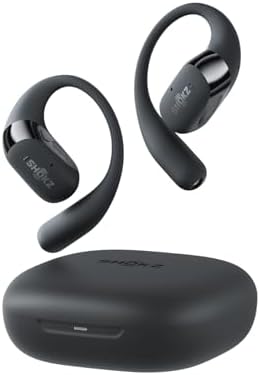
- Open-ear headphones designed for workouts, commuting, and all-day wear
- DualBoost Technology delivers dynamic audio with clear highs and rich mids
- OpenBass 2.0 provides bold bass in an open-ear design
4. Bose Sport Open Earbuds — Best Open-Ear Sound Quality
The Bose Sport Open Earbuds take a different design approach: twin 16mm drivers positioned outside the ear canal using Bose’s proprietary OpenAudio technology. The result is the best pure sound quality of any open-ear running headphone on this list — Bose-level audio performance with complete ambient awareness. The molded design locks firmly onto the ear without hooks, and the IPX4 rating handles sweat and light rain. At $199 they are the most expensive option here, but for runners who prioritize audio experience alongside safety, no open-ear alternative on Amazon matches the Bose Sport Open sound. Unlike bone conduction headphones, these are pure air conduction — zero vibration, maximum audio richness.
Specs: Dual 16mm open-ear drivers | OpenAudio technology | 8h battery | 30-min charge for 3h | IPX4 | Bluetooth 5.1 | App-controlled settings
✅ Pros: Best sound quality on this list, Bose premium audio, secure molded fit, no vibration.
❌ Cons: Most expensive at $199, IPX4 only, no ear hook (less stable for trail running).

- Open-ear sports headphones — first-of-their-kind workout headphones that don’t go in your ears, instead they rest secure…
- Product Note : If the size of the earbud tips does not match the size of your ear canals or the headset is not worn prop…
- Comfortably, secure running headphones — Designed with athletes in mind, Bose Sports Open Earbuds are meticulously molde…
Who Should Buy Which
Buy Shokz OpenRun Pro 2 (bone conduction) if you run on roads with traffic and want maximum situational awareness, train in variable weather, and want the best bone conduction audio available. The reflective strip is a practical safety bonus for early morning or evening runs.
Buy Shokz OpenRun (bone conduction) if you want proven bone conduction headphones at the best price, run in heavy rain (IP67 beats the Pro 2), or are new to bone conduction and want to try the technology without the Pro 2 premium.
Buy Shokz OpenFit 2 (open-ear) if sound quality matters as much as safety, you want the richer bass of air conduction, or you prefer earbuds to a wraparound headband while still staying aware of your environment.
Buy Bose Sport Open (open-ear) if audio quality is your top priority and you are willing to pay a premium for Bose-level sound in an open-ear running format — the best-sounding option on this list by a clear margin.
Frequently Asked Questions
Are bone conduction headphones safe for running?
Yes — bone conduction headphones are considered the safest headphone type for outdoor running because they leave the ear canal completely open. You hear your music and your full environment simultaneously. Many running clubs and race events explicitly recommend bone conduction over in-ear earbuds for safety reasons.
Do bone conduction headphones sound good?
Sound quality has improved dramatically in recent generations. The Shokz OpenRun Pro 2’s DualPitch™ system produces genuinely good audio — clear mids and highs with meaningful bass. Bone conduction headphones still cannot match the bass depth of in-ear or open-ear air conduction alternatives, but for the majority of running scenarios (podcasts, music, calls), they are more than adequate.
Can I use bone conduction headphones in the rain?
Yes — the Shokz OpenRun is IP67 rated (fully waterproof to 1 meter), making it the most weather-resistant option on this list. The OpenRun Pro 2 is IP55 (sweat and rain resistant but not submersible). Neither should be used for swimming. The Bose Sport Open and Shokz OpenFit 2 are IPX4/IP54 rated — fine for sweat and light rain but not heavy downpours.
Bone conduction vs open-ear — which is better for safety?
Bone conduction headphones provide slightly better situational awareness because the ear canal is completely unobstructed — ambient sound passes through fully and naturally. Open-ear earbuds are also very safe but position drivers near the ear opening, which can marginally reduce ambient sound at higher volumes. For maximum safety on busy roads, bone conduction is the preferred choice.
Final Verdict
For most runners, the Shokz OpenRun Pro 2 is the standout choice — the most advanced bone conduction headphones available on Amazon, with a reflective strip, DualPitch audio upgrade, and USB-C convenience. Budget-conscious runners get the same core technology at $50 less with the OpenRun. If audio quality is a priority, the Shokz OpenFit 2 delivers richer sound with the same awareness and stability. And if you want the best open-ear audio money can buy for running, the Bose Sport Open Earbuds justify their $199 price tag. Whatever your choice — bone conduction headphones or open-ear — both technologies are dramatically safer than traditional in-ear earbuds for outdoor running in 2026.
Written by the GearGuide editorial team, specializing in sports and fitness equipment since 2024.
Last updated: March 2026 | Affiliate Disclosure