Electrical Muscle Stimulation: Complete Guide 2026
Electrical muscle stimulation (EMS) has crossed over from physical therapy clinics and elite sports labs into mainstream home fitness — and for good reason. Whether your goal is accelerating recovery after a hard training session, rebuilding strength after an injury, or adding a performance edge to your existing routine, electrical muscle stimulation offers a science-backed, drug-free option that is increasingly accessible and affordable. This guide covers everything you need to know about EMS in 2026: how it works, what the research says, how it differs from TENS, the best devices available on Amazon, and how to use it safely and effectively.
What Is Electrical Muscle Stimulation?
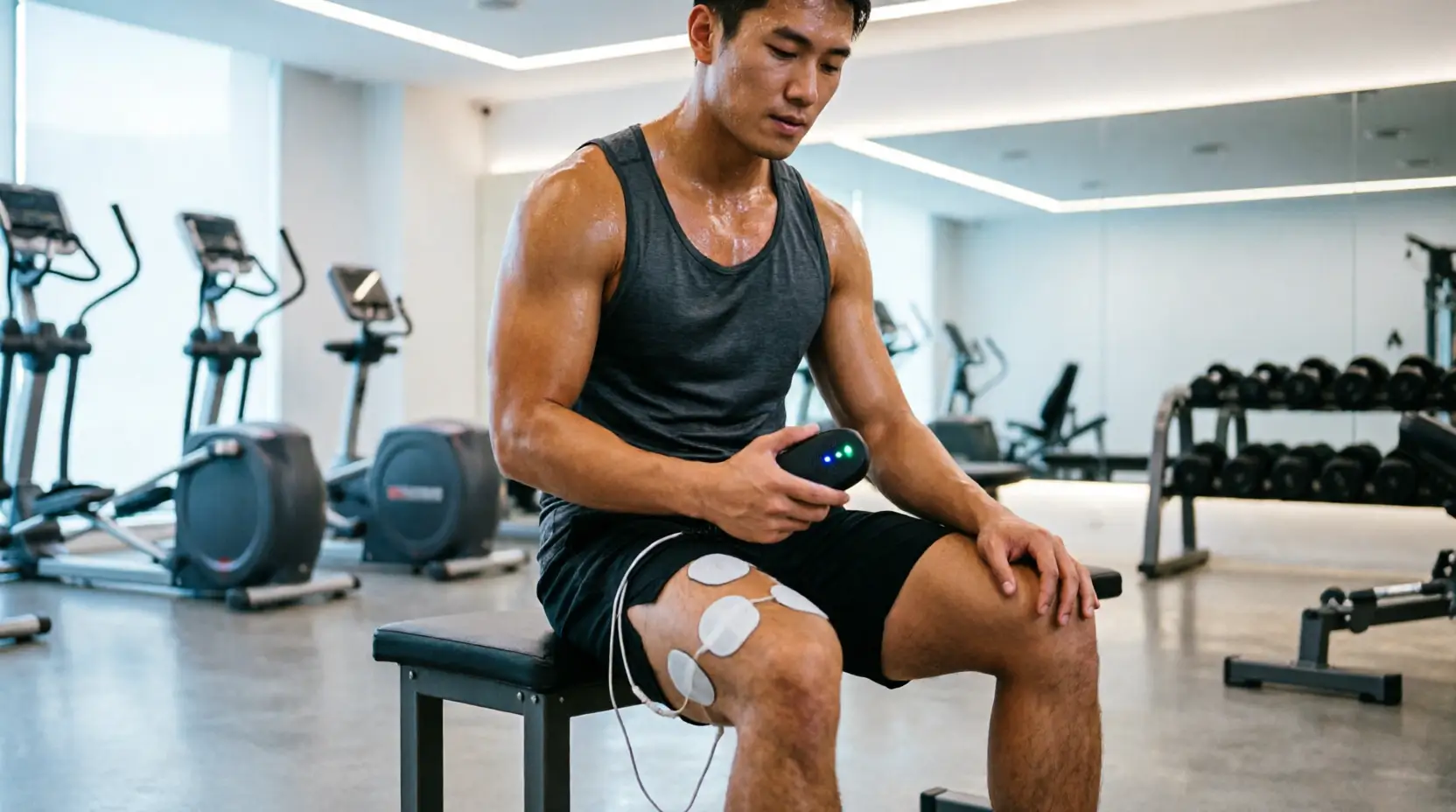
Electrical muscle stimulation is a technology that uses low-level electrical impulses delivered through electrodes placed on the skin to trigger involuntary muscle contractions. Unlike voluntary contractions produced by exercise, EMS bypasses the central nervous system and directly stimulates motor neurons — causing the muscle to contract regardless of conscious effort. This mechanism makes electrical muscle stimulation uniquely useful for two distinct applications: enhancing performance in healthy muscles, and rehabilitating injured or weakened ones.
Modern EMS devices deliver current in waveform patterns — typically biphasic symmetric or asymmetric pulses — at frequencies ranging from 1 Hz (relaxation and massage) up to 120 Hz (maximum strength training). The key variables are pulse frequency, pulse width, and intensity (mA). Understanding these parameters is what separates effective EMS use from ineffective use.
EMS vs TENS: Key Differences
EMS and TENS (Transcutaneous Electrical Nerve Stimulation) are often confused or conflated. They use similar technology but work differently and serve different purposes. Electrical muscle stimulation targets motor nerves to produce visible muscle contractions — it is primarily a performance and rehab tool. TENS targets sensory nerves at lower frequencies to disrupt pain signals — it is primarily a pain management tool. Many quality devices, including the Compex Sport Elite and Therabody PowerDot, combine both modes, making them versatile tools for athletes who need both muscle activation and pain relief.
| EMS | TENS | |
|---|---|---|
| Target | Motor nerves | Sensory nerves |
| Effect | Muscle contraction | Pain relief |
| Frequency | 35–120 Hz | 2–150 Hz (low) |
| Best For | Performance, rehab, recovery | Chronic pain, acute injury pain |
| Visible Contractions | Yes | No |
Electrical Muscle Stimulation for Performance
Strength Gains
Research consistently shows that electrical muscle stimulation at frequencies of 50–85 Hz activates a higher percentage of fast-twitch muscle fibers than voluntary exercise alone. A landmark meta-analysis published in the Journal of Strength and Conditioning Research found that EMS training produced significant strength gains in healthy athletes when used alongside conventional training — not as a replacement. The mechanism is recruitment of deep muscle fibers that voluntary contractions often miss, particularly in stabilizer muscles around the hips, core, and shoulders. EMS is used by Olympic sprinters, professional rugby teams, and MMA fighters precisely for this recruitment advantage.
Recovery Acceleration
Post-workout electrical muscle stimulation at low frequencies (1–10 Hz) acts as an active recovery tool — increasing blood flow to fatigued muscles, accelerating lactate clearance, and reducing delayed onset muscle soreness (DOMS). Compex’s Recovery and Recovery Plus programs operate on this principle. Athletes using EMS recovery protocols consistently report faster readiness for the next training session, which over weeks and months compounds into more training volume and better adaptation.
Warm-Up Enhancement
Pre-workout electrical muscle stimulation at pre-warm up frequencies (8–10 Hz) increases blood flow and muscle temperature without inducing fatigue — a key advantage over traditional warm-up protocols for athletes who need to conserve energy before competition. Used for 10–20 minutes before training, EMS warm-up programs prime the neuromuscular system without burning glycogen.
Electrical Muscle Stimulation for Rehabilitation
Preventing Muscle Atrophy
During injury-enforced inactivity, muscles lose mass and strength rapidly — a process called disuse atrophy. Electrical muscle stimulation (specifically NMES — Neuromuscular Electrical Stimulation) is used clinically to maintain muscle mass in immobilized limbs. For athletes recovering from ACL surgery, hip replacements, or extended rest due to soft tissue injuries, EMS provides a way to keep muscles active when weight-bearing exercise is not possible. This is one of the most evidence-backed applications of electrical muscle stimulation in clinical literature.
Rebuilding Strength Post-Injury
After injury, neurological inhibition often prevents full voluntary muscle recruitment even once pain subsides — a phenomenon well documented in quadriceps after knee injuries. Electrical muscle stimulation bypasses this inhibition, allowing the muscle to be trained even when voluntary activation is compromised. Physical therapists use EMS to re-educate the neuromuscular connection and restore full activation patterns more quickly than exercise alone.
Best EMS Devices on Amazon in 2026
1. Compex Sport Elite 3.0 — Best for Serious Athletes
The Compex Sport Elite 3.0 is the gold standard for at-home electrical muscle stimulation used in athletic training and recovery. With 10 dedicated programs (4 strength, 2 warm-up, 3 recovery, 1 TENS), FDA-cleared status, and over 20 years of professional sports adoption, it is the device most trusted by coaches and physical therapists. The wired electrode system provides stable, consistent stimulation — essential for strength-training protocols that require precise frequency control. Used by Olympic athletes and recommended by Garage Gym Reviews as the best value among premium EMS devices.
Specs: 4 channels | 10 programs | 5 levels of progression | FDA-cleared | Includes 12 snap electrodes, carrying case, charger
✅ Pros: Most complete program library, FDA-cleared, proven in elite sport, durable wired system.
❌ Cons: Wired only (less convenient than Bluetooth), higher price point at $399.

- COMPLETELY REDESIGNED – Water resistant silicone sleeve, improved LCD display, center navigation button, and grip.
- UP TO 8 HOURS OF STIMUATION – USB rechargeable Lithium Ion battery
- 10 PROGRAMS – 2 Warm Up, 4 Strength, 3 Recovery, 1 TENS
2. Therabody PowerDot 2.0 Duo — Best Bluetooth EMS Device
The PowerDot 2.0 Duo brings electrical muscle stimulation into the smartphone era. Controlled entirely via the Therabody app, it provides guided programs for performance, recovery, and pain relief with Bluetooth precision. The wireless pod design makes it exceptionally easy to use during post-workout recovery or travel. It includes personalized protocol recommendations based on your training data and integrates with other Therabody products. The Duo version allows simultaneous stimulation of both sides of a muscle group — faster and more complete recovery than single-pod systems.
Specs: Wireless Bluetooth pods | App-controlled | NMES + TENS modes | 20-hour battery life | Includes 2 pods, electrode pads, carrying case
✅ Pros: Wireless and app-controlled, excellent UX, Therabody ecosystem integration, 20-hour battery.
❌ Cons: Short lead cables can be awkward for some muscle groups, premium price.

- Smart muscle stimulation for recovery: PowerDot 2.0 Duo uses advanced TENS and NMES technology to provide targeted muscl…
- The smarter the technology, the safer and more effective the treatment: The PowerDot app integrates with your favorite f…
- Period Pain Relief: PowerDot’s Smart Period Pain Relief Program, available in the PowerDot app, provides a safe and effe…
3. AVCOO 3-in-1 TENS Unit — Best Budget Pick
For beginners exploring electrical muscle stimulation without committing to a premium device, the AVCOO 3-in-1 offers remarkable value. With 24 modes covering TENS, EMS, and massage functions, a rechargeable 400mAh battery lasting up to 50 hours, and 10 included electrode pads, it covers basic pain relief, muscle recovery, and light strength training at around $33. It lacks the program sophistication of Compex or the wireless convenience of PowerDot, but for casual use and pain management, it delivers solid performance with a user-friendly color display and Type-C charging convenience.
Specs: Wireless Bluetooth pods | App-controlled | NMES + TENS modes | 20-hour battery life | Includes 2 pods, electrode pads, carrying case
✅ Pros: Exceptional value under $35, 24 modes, long battery life, color display, Type-C charging, dual independent channels for personalized relief.
❌ Cons: No dedicated athletic programs, smaller review base compared to established brands, electrode pads wear out faster than premium alternatives.

- A Drug-Free Way to Relieve Your Pain: The AVCOO 3-in-1 TENS machine combines three powerful therapies—TENS, EMS, and MAS…
- 24 Modes and 30 Levels: Featuring 24 modes and 30 intensity levels, this TENS unit for pain relief offers personalized t…
- Innovative Designs Upgrade Your Relief Experience: Upgraded with a 3.3″ color display and an intuitive interface, this m…
How to Use Electrical Muscle Stimulation Safely
Electrode Placement
Place electrodes on the muscle belly — never over joints, the spine, the front of the neck, or the chest near the heart. For most muscles, a two-pad placement covers the motor point (where the nerve enters the muscle) and the distal end. Most premium devices include placement guides specific to each muscle group. Correct placement is the single most important factor in effective electrical muscle stimulation — poor placement produces weak contractions or discomfort without benefit.
Frequency Selection by Goal
Use 1–10 Hz for massage and recovery, 35–50 Hz for endurance and muscle re-education in rehab, 50–85 Hz for strength training, and 85–120 Hz for explosive strength and plyometric potentiation. Most commercial devices simplify this into named programs — follow the device’s own program labels rather than manually adjusting frequency unless you have clinical supervision.
Contraindications
Do not use electrical muscle stimulation if you have a pacemaker or implanted cardiac device, over open wounds or broken skin, during pregnancy (without medical supervision), over cancerous tissue, or directly over the carotid arteries. People with epilepsy or severe cardiac conditions should consult a physician before use. For general fitness and recovery use in healthy adults, EMS is safe when used as directed.
Frequently Asked Questions
Can electrical muscle stimulation replace exercise?
No — and this is the most important misconception to address. Electrical muscle stimulation is a complement to exercise, not a substitute. It cannot provide cardiovascular conditioning, functional movement patterns, or the metabolic stimulus of real training. What it does do — muscle activation, recovery acceleration, atrophy prevention — is most effective when combined with a structured training or rehabilitation program.
How often should I use EMS?
For recovery programs, daily use is safe and beneficial. For strength-training EMS programs, treat sessions like weight training — allow 48 hours between sessions on the same muscle group. Most Compex and PowerDot protocols are designed around 3–5 sessions per week depending on the program type.
Is EMS painful?
At low to moderate intensity, electrical muscle stimulation produces a tingling or pulsing sensation that most users find comfortable. High-intensity strength programs produce strong, forceful contractions that can feel intense but should not be painful. If you feel sharp pain or skin irritation, reduce intensity or check electrode placement. Start at low intensity and increase gradually over multiple sessions.
How long does it take to see results from EMS?
Recovery benefits (reduced DOMS, improved readiness) are felt after the first few sessions. Strength and rehab benefits from consistent electrical muscle stimulation training programs typically become measurable after 4–6 weeks of regular use, which aligns with standard neuromuscular adaptation timelines documented in the research literature.
Final Thoughts
Electrical muscle stimulation is one of the most versatile and evidence-backed recovery and performance tools available to home users in 2026. Whether you invest in the Compex Sport Elite 3.0 for serious athletic training, the PowerDot 2.0 Duo for connected wireless convenience, or the AUVON for budget-friendly pain relief and recovery — any quality EMS device used consistently and correctly will deliver measurable benefits. The key is matching the device to your actual goal: performance athletes need the program depth of Compex, recovery-focused users will appreciate the app integration of PowerDot, and beginners need nothing more than the AUVON to get started.
Written by the GearGuide editorial team, specializing in sports and fitness equipment since 2024.
Last updated: March 2026 | Affiliate Disclosure